Wrote a Novel (Literally)
A Short Novel about Hard Scrabble Life in the Texas Hill Country and Port of Galveston. The rise of the Populists, Bi-Racial Unionism, Sewer Socialists Form the Backdrop

I grew with family rooted in a very different, entirely “analog” era of Texas than the one I was living at the end of the 20th century. My grandpa reveled in these stories of hard scrabble farm life in a bend of Rocky Creek outside Shiner Texas. His stories rebounded with vibrant, almost bucolic sounding life closer to the land but were never romantic. Grandma had the stories of the old “Bohemian” (most Texas Czechs are Moravians) community in Austin.
Anywho I just finished writing a short novel (my first after the novella) reconciling those memories with other more political and personal ones about Texas at the end of the 19th (running up to the early 20th century). I have no idea if it’s any good, especially good enough to get printed–though I think it will at the least. It’s certainly going to get reworked, reworked and reworked again. But it was hella fun to write over the last year and change.
The Texas of this novel is not frontier legend or oil-boom bravado. It is creek bottoms and marginal thin-soiled land, tenant farms and gritty port life with cotton dust filling the air. It’s about the rhythms of work, debt, family, struggle and survival in the Texas Hill Country and then the busy port of Galveston (with a last act of exile set up north).
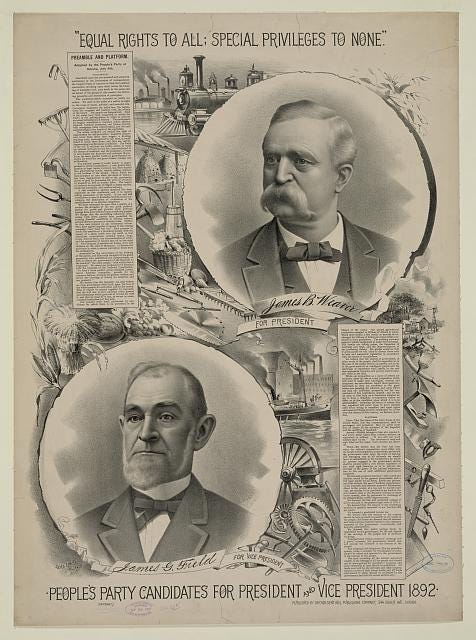
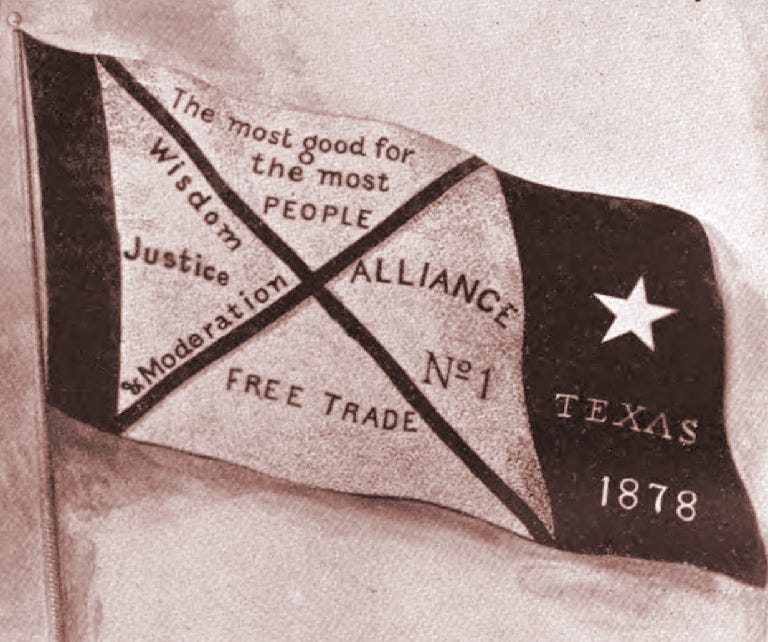
The novel moves through the orbit of the Texas Farmers Alliance, the rise and defeat of the Populist Party, the militancy of Galveston’s waterfront unions, and later the pragmatic municipal socialism of the Sewer Socialists of Wisconsin. These are not treated as footnotes or backdrops, but as forces that shaped marriages, parenthood, migration, and belief.
One larger-than-life figure appears directly in the book: Sam Ealy Johnson Sr., the Populist organizer and patriarch whose political fire and moral certainty helped shape the Hill Country and, eventually, his grandson Lyndon B. Johnson. In The Most Good, he is neither saint nor symbol. (Also hella fun to write about Johnsons even if you bend them around your own story).
If you are a friend and want to do me a good turn, I am happy to see you the manuscript for feedback and thoughts. Just drop me a line, cowboy.